

Richard Mattus is a Swedish industrial emissions expert with over 40 years of global experience, specializing in low-concentration methane mitigation. He led the 2025 UNECE Best Practice Guidance on Ventilation Air Methane (VAM) Mitigation.
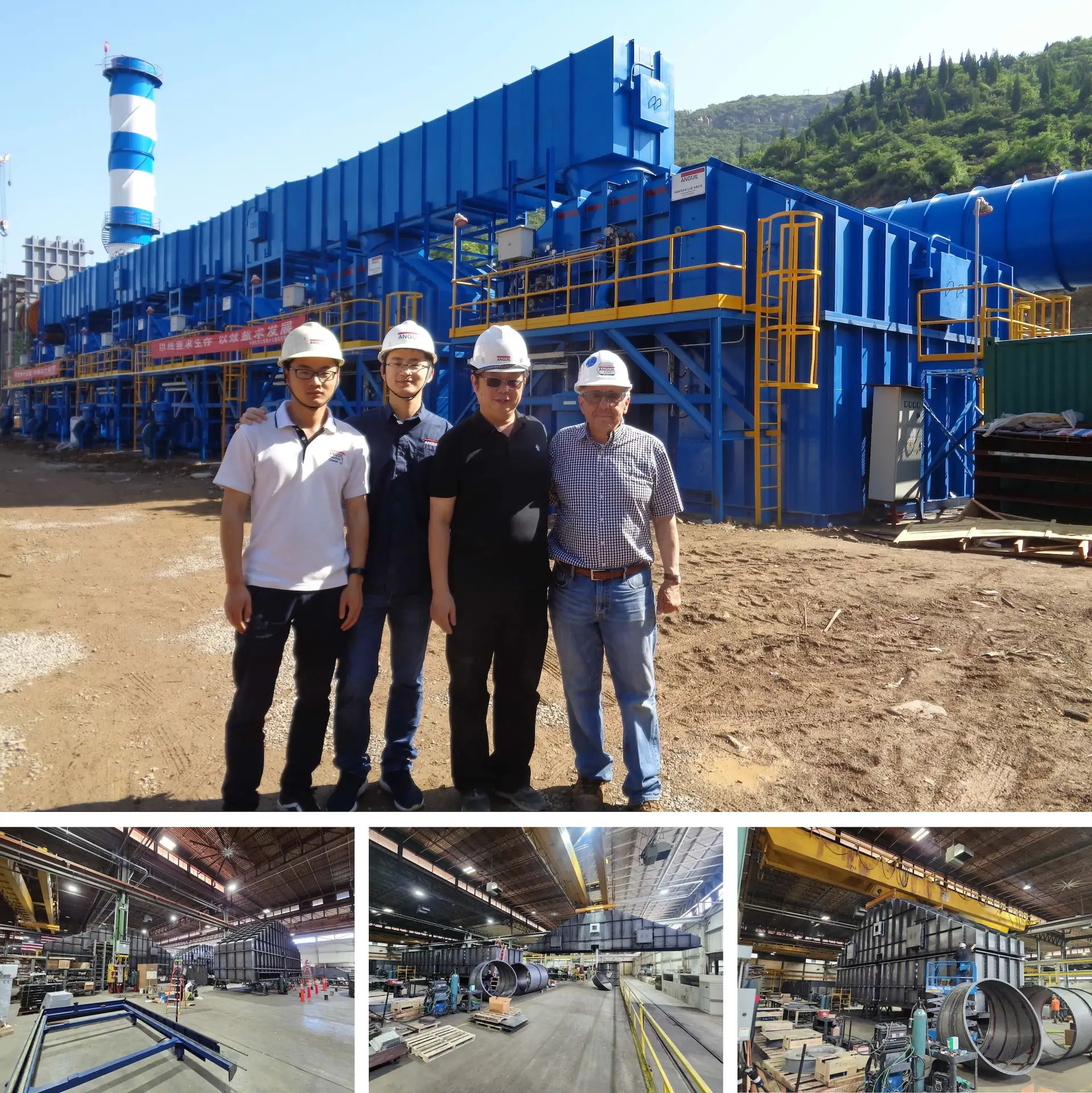
Methane is one of the most powerful greenhouse gases on Earth — trapping more than 80 times as much heat in the atmosphere as carbon dioxide, compared over a 20-year period. Yet, it’s also one of the most overlooked. Large amounts escape silently from coal mines every day through ventilation systems designed to protect miners. This ventilation air methane (or VAM) is highly diluted but by volume potent enough to warm the planet.
A technology known as Regenerative Thermal Oxidation (RTO) has been quietly proving that these emissions can be safely destroyed — and even turned into useful energy.
The Birth of a Solution
The idea behind RTO is simple, even if the engineering is not: polluted air is heated until the contaminants burn off. This principle has been used since the 1970s, when new air-quality laws required industries to reduce harmful emissions known as volatile organic compounds (VOCs).
In the 1990s, engineers realised the same approach could work for methane leaking from coal mines. In 1994, the world’s first RTO system for VAM was tested at the Thoresby Mine of British Coal in the UK. Three years later, a second demonstration, which also demonstrated energy recovery, took place at BHP Billiton’s Appin Mine in Australia. Both showed that methane could be safely oxidised, preventing it from reaching the atmosphere.
Energy Recovery and Climate Payback
One reason RTO has gained attention is its efficiency. When the concentration of methane in the air stream reaches just 0.2%, the system can sustain the oxidation process on its own — no extra fuel required.
That heat energy developed during oxidation can, when the methane concentration exceeds 0.2%, be recovered to produce hot water, heating, cooling or even electricity under the right conditions. However, power generation systems for electricity are expensive: In a VAM Power Plant, the RTO units act as furnaces burning an extremely lean fuel. Because it also needs the full suite of power plant components — steam drum, turbine, generator, condenser — costs rise sharply. A VAM Power Plant can cost four times more and take twice as long to build as a standard VAM mitigation plant.
For this reason, experts often argue that the most climate-efficient use of the technology is to focus first on simple mitigation, possibly paired with small-scale heat recovery. The priority is to stop the methane from escaping into the atmosphere and thereby to slow down global warming.
The RTO solution has a cleaning efficiency of 97 to 99% (of all methane being processed) and an availability (considering annual maintenance) of around 96%. These are both considered as high values.
Australia Leads the Way
Australia became the global pioneer of VAM mitigation when the first large-scale commercial RTO installation began operating in 2007. It was named WestVAMP, located at the West Cliff mine of BHP-Billiton and it ran successfully for a decade, proving that the technology can be reliable, safe, and effective.
The coal mining industry in Australia has, in addition to the RTO solution, supported and evaluated several other technologies aimed at mitigating VAM emissions. So far, however, only the RTO solution has proven successful beyond laboratory-scale demonstrations.
Today, Australia remains one of the few countries where policy and economics work in favor of methane abatement. A carbon price of about USD 23 per tonne of carbon dioxide equivalent (tCO₂e) gives companies a real incentive to invest in cutting methane emissions. That price is high enough to make VAM projects financially viable — a rarity worldwide.
Encouraged by these results, the Australian coal industry now shows renewed interest in applying the RTO solution for VAM mitigation. With proven results on three continents — Australia, China, and the United States — the technology is now moving to wide scale deployment.
China’s Growing Role
China, home to the world’s largest coal sector, is at the forefront of the country’s energy transition. In alignment with its national climate objectives, China has committed to peaking coal consumption by 2030 and achieving carbon neutrality by 2060. According to the International Energy Agency (IEA), one-third of the global capacity for sustainable energy is located in China. As the country prepares its next Five-Year Plan in 2026, emerging policies will play a critical role in determining whether ventilation air methane (VAM) mitigation becomes a standard aspect of coal-sector modernization. This shift could pave the way for what some are calling a potential “Clean Exit” from coal reliance.
Focusing on VAM mitigation (with VAM Power Plants reserved for exceptional cases) alongside the gradual phase-out of coal as a base fuel would represent meaningful progress toward that goal.
China commissioned its first large-scale VAM RTO installation in 2008, and by 2025 there are around ten operational systems nationwide — most combining methane destruction with electricity generation. These projects show how RTO technology can simultaneously cut emissions and deliver local energy benefits.
Europe’s Missing Piece
Despite its leadership in climate policy, Europe has not yet included coal mine methane abatement in its EU Emissions Trading System (ETS) — the world’s largest carbon market. Adding VAM projects to the ETS would provide the same type of financial signal that spurs investment in Australia, helping to scale up proven technologies while rewarding genuine emission reductions.
Methane abatement from coal mines is one of the most measurable and verifiable forms of climate action that are globally available. Including it in compliance markets would not only unlock private investment but also help Europe meet its near-term climate goals more efficiently.
A Proven Technology, Ready to Scale
After three decades of testing, Regenerative Thermal Oxidation has evolved from a conceptual idea into a well proven climate tool. It works at real mines, under real conditions, and its results are measurable in both tonnes of methane destroyed and degrees of global warming avoided.
Methane mitigation may not grab as many headlines as carbon capture or green hydrogen — but it delivers faster results. Each tonne of methane removed today buys time for the world to transition to cleaner non-fossil energy tomorrow.
Proven through several decades of successful operation — and with a single installation delivering a climate benefit equivalent to removing two million cars from the road the RTO VAM solution is recognised as one of the most effective climate actions available. It is ready for large-scale global deployment as a powerful tool for greenhouse gas emissions reduction.
There are globally tens of thousands of RTO installations serving various types of industries. International RTO system suppliers with relevant experience of large scale VAM mitigation include: Anguil, Biothermica and Dürr
Earlier this year, the Sustainable Energy Division of the UNECE in Geneva published a report on the technical and financial feasibility of VAM mitigation, providing guidance on when and how to implement such projects. (See: ) UNECE Best Practice Guidance on Ventilation Air Methane Mitigation | UNECE
With the right policies, carbon markets, and partnerships, RTO-based VAM mitigation could help close one of the largest and most overlooked gaps in global climate action.

I was registered for the webmar toda6 but was unable to attend. Esther a recording i can access a5hank yoy
Here is the link: Real-world impact in a Clean Exit | Ember https://ember-energy.org/latest-updates/real-world-impact-in-a-clean-exit/ – Sorry for a late reply. Best Kaj Embren