
Every tonne of coal mined to replace disrupted gas comes with methane that will trap the sun’s heat for the duration of its atmospheric lifetime — then oxidise into CO₂, which stays for centuries. Reducing those emissions has an immediate effect on warming. The technology to do it exists, costs seven dollars a tonne, and is available right now.

Kaj Embren, Senior Advisor | Sustainability & Climate Strategies | Award-Winning Social Media Influencer | Podcaster | Speaker
London, England
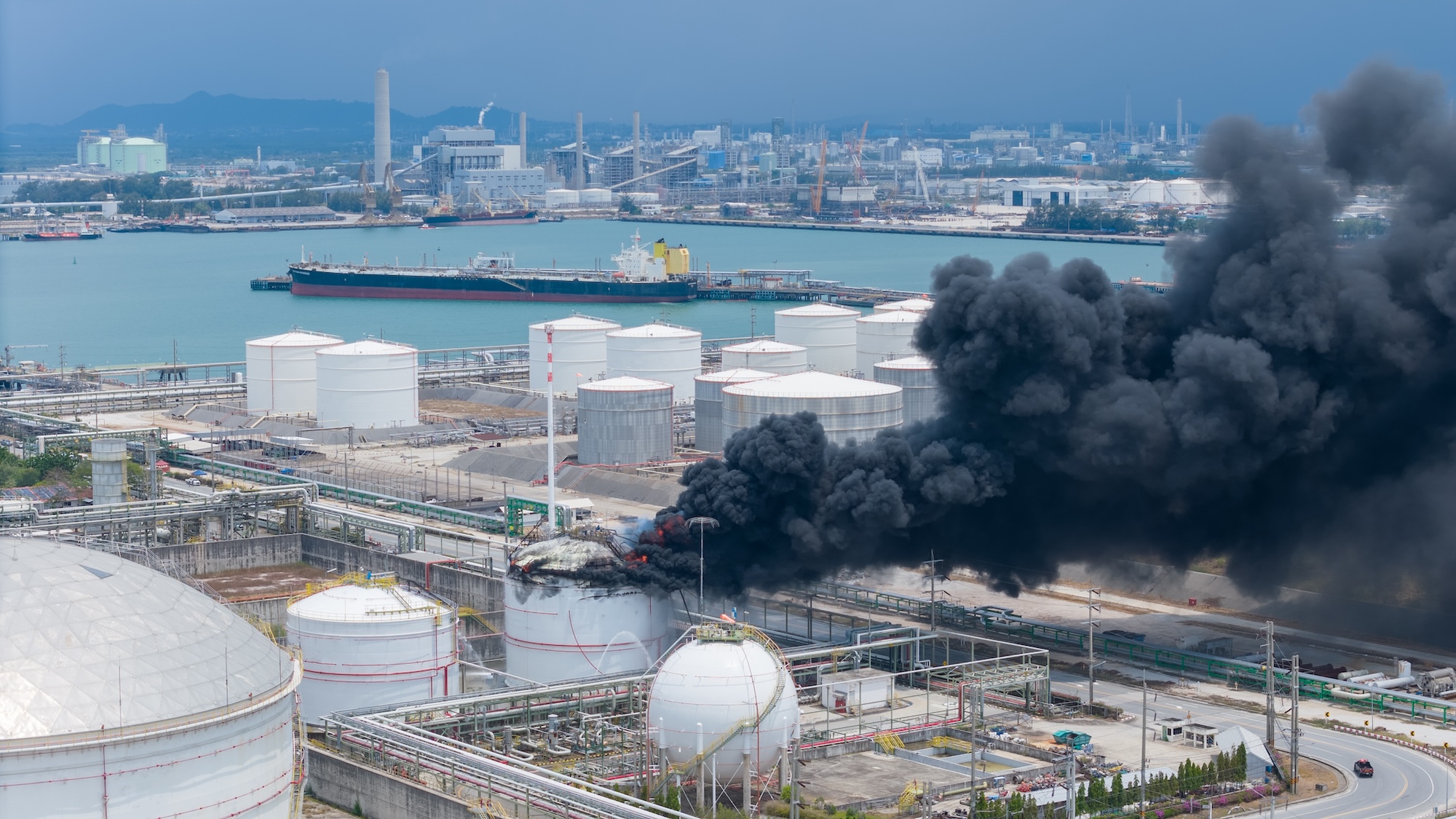
On 18 March 2026, Israel struck the South Pars gas field in Iran — the world’s largest natural gas reserve, shared with Qatar. Within hours, Iran retaliated by hitting Ras Laffan Industrial City. Two of Qatar’s fourteen LNG production trains were destroyed: 12.8 million tonnes of annual capacity offline, $20 billion a year in lost revenue. QatarEnergy’s CEO told Reuters the damage had “set the region back 10 to 20 years.” The Strait of Hormuz, through which one-fifth of the world’s oil and LNG trade passes, has been effectively closed since 28 February. Oil prices surged past $120 a barrel. European gas benchmarks nearly doubled. The IEA called it “the greatest global energy security challenge in history.”
When Ira Joseph, a global fellow at Columbia University’s Center for Global Energy Policy, was asked on NPR what would fill the gap, the answer was unambiguous: “In the most immediate moment, it’s really coal.”
That single word is the pivot point of everything that follows.
Coal Is Back. The Methane Comes With It.
South Korea has already lifted its cap on coal-fired generation. In Southeast Asia, aging plants in Thailand and Indonesia that were on retirement pathways are being reconsidered. In the United States — where data centre electricity demand was already keeping coal plants open past planned retirement dates, and where operators retired just 4.6 gigawatts of coal capacity in 2025 against a planned 12.3 gigawatts — national security has now joined commercial pressure as a justification. Coal is not coming back as a choice. It is coming back as a necessity.
Every tonne of that coal comes with methane. Underground seams are saturated with gas; the ventilation systems that keep miners alive pump it to the surface in vast, dilute streams where it disperses into the atmosphere. Coal mines globally emit approximately 40 million tonnes of methane annually — the warming equivalent of more than 3.2 billion tonnes of CO₂, roughly the entire annual greenhouse gas output of the European Union. Methane is approximately 82 times more potent than CO₂ over a 20-year period. Unlike CO₂, which once emitted remains in the atmosphere for centuries, methane has an atmospheric lifetime of around 12 years — which means that cutting it today reduces warming immediately, not gradually. Every tonne that is destroyed rather than vented removes an active warming agent from the atmosphere at the moment of destruction. When a government extends the life of a coal mine in response to an energy crisis, it is not just choosing a fuel. It is choosing to allow that methane to leak for as long as the mine operates.
This cost does not appear in the emergency energy policy announcements of European governments. It does not feature in the balance sheets of the utilities extending their coal contracts. But the technology companies whose data centres are keeping those plants alive have made net zero commitments. Steelmakers are under Scope 3 scrutiny. Banks financing extended coal operations have climate obligations that will eventually require them to account for the methane their borrowers are venting. The war has made coal necessary again. It has not made that scrutiny disappear.
The Double Problem — And the Choice It Forces
The war is creating not one problem for methane abatement, but two. The first is the obvious one: more coal means more methane leaking for longer. The second is subtler. The economic shock — surging energy costs, sovereign debt pressure, the spectre of stagflation — gives governments a powerful excuse to defer every non-essential expenditure. Methane abatement, in that framing, becomes a luxury that crisis conditions do not permit. This argument will be made in energy ministries, treasury departments, and coal company boardrooms. The financial crisis, real as it is, will be deployed as a licence to vent the gas and return to the question when conditions improve. In this industry, conditions rarely improve on a timetable that suits climate action.
But the same crisis contains, if handled correctly, the mechanism for its own correction. Governments approving mine extensions, signing new supply contracts, issuing emergency permits — every one of those decisions is a leverage point. Methane abatement can be attached as a condition of approval. The technology to do it has existed since 2007. Regenerative Thermal Oxidisers deployed on ventilation shafts destroy over 98% of the methane that passes through them, require no supplemental fuel at concentrations above 0.2%, and cost approximately seven dollars per tonne of CO₂ equivalent — a fraction of the carbon capture technologies currently receiving government subsidies. China is promoting the capture and utilisation of methane emissions across its coal sector. Australia has used carbon pricing to drive deployment. In the United States, at least one Appalachian operator has chosen it voluntarily. The technology is not the problem.
The Window That Will Not Stay Open
What prevents action is institutional. Coal mine methane falls between every major multilateral funding programme — too industrial for agricultural methane schemes, too coal-adjacent for oil and gas initiatives. Development banks are not financing RTO installations, judging the reputational risk of association with coal to outweigh the immediate climate benefit of destroying its methane. The Middle East crisis makes that position impossible to sustain. The argument that coal can simply be refused has lost. The only viable response is: if coal must operate, its methane must not reach the atmosphere.
The financing is within reach. Green loan structures conditioned on methane abatement could make RTO deployment a requirement for any coal operation seeking credit. Annuity models — in which third-party partners design, install and operate systems for a fixed annual fee — are being developed and could scale rapidly with the right policy signal. Engineered methane destruction credits, verified by continuous sensor monitoring and independently audited, are fundamentally different from the forest offsets that discredited the voluntary carbon market: a tonne of methane destroyed by an RTO is gone, measurably and immediately. That verifiability is the foundation of a credit the market can trust.
The war did not create the coal methane problem. But it has opened a window that rarely exists: a moment when coal’s return is unavoidable, every approval is a decision point, and the cost of attaching methane abatement as a condition is seven dollars a tonne. That window will not stay open. The mines being extended today will operate for decades. What happens to their methane over that period is being decided right now.
—
Kaj Embren Founder of the Methane Brief and Communications Strategist for the Clean Exit Campaign. methanebrief.org

Very important insight that needs to be discussed.