

Kaj Embren, Senior Advisor | Sustainability & Climate Strategies | Award-Winning Social Media Influencer | Podcaster | Speaker
London, England
The Market’s Flight to Quality — and the Deforestation Credit Crisis
The voluntary carbon market (VCM) is not collapsing. It is bifurcating — and the distinction matters enormously for anyone with capital or policy exposure to carbon credits.
Generic, low-integrity avoided-deforestation credits — issued under the Reducing Emissions from Deforestation and Forest Degradation scheme, known as REDD+ — have plummeted to $5.30–6.00 per tonne. Independently certified, high-integrity removals command $15–25. High-rated credits now cost roughly four times their low-quality equivalents. The VCM is no longer driven by volume — it is driven by integrity, and the burden of proof has shifted permanently.
The structural cause is well-documented. The Kariba REDD+ project issued approximately 15 million excess credits against baselines that predicted deforestation rates that were never likely to materialise. Verra, the market’s leading registry, posted a $19.4 million loss in 2024 attempting a course correction. Corporate buyers including Volkswagen and Gucci faced reputational exposure. Low-integrity avoided-deforestation projects are increasingly at risk of becoming stranded assets as buyers migrate toward credits that can demonstrate additionality and permanence — not model them.
High-quality nature-based projects retain genuine value and risk. But the market’s systemic shocks have created an opening for an asset class that solves the permanence and additionality problems by design rather than by assumption.
The Engineering-Grade Alternative: Ventilation Air Methane Thermal Oxidation
Ventilation Air Methane (VAM) is not a new idea. It is an overlooked one — and it addresses the two structural weaknesses of REDD+ credits directly.
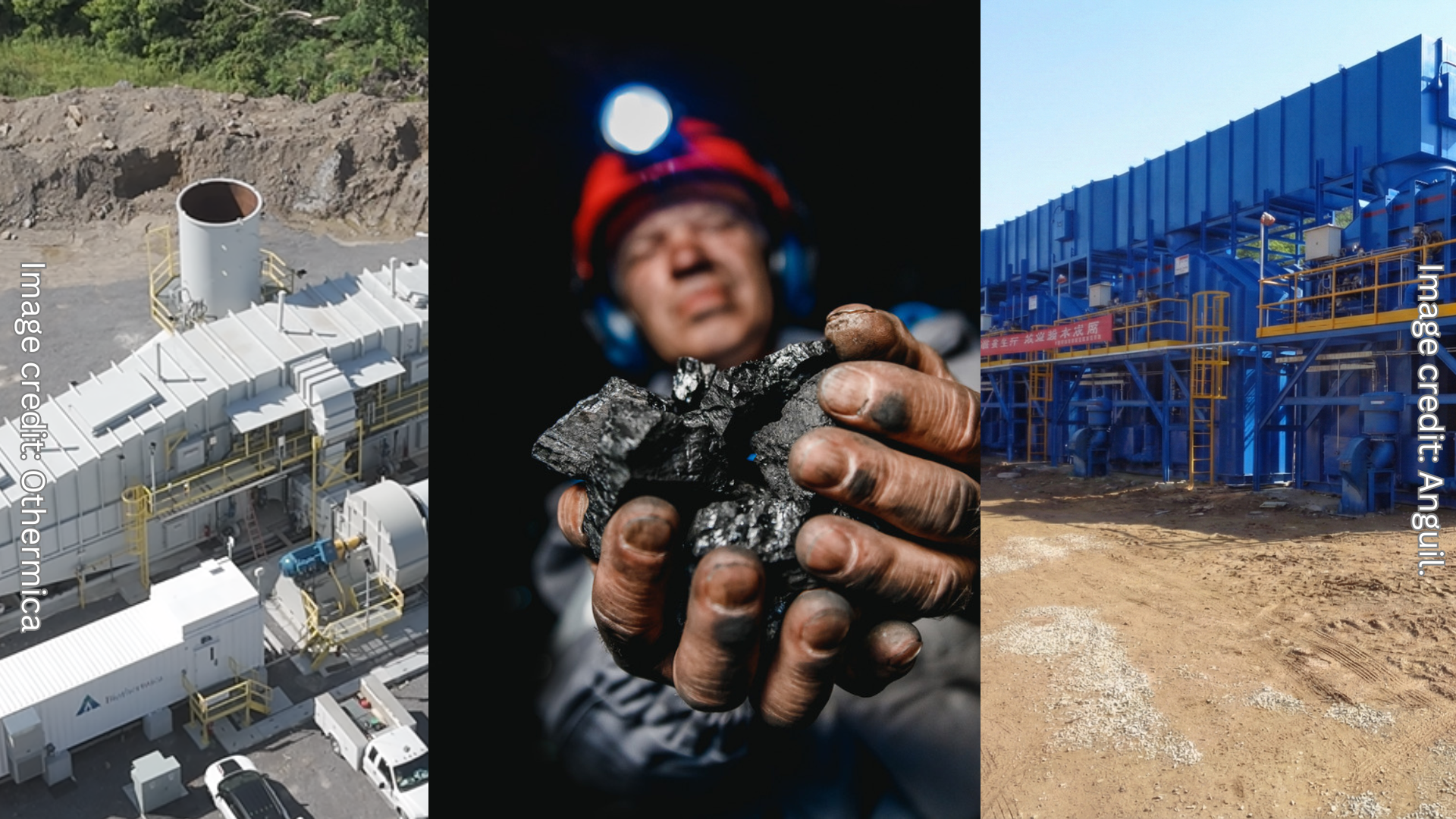
Methane is approximately 82 times more potent than CO₂ over a 20-year period. Coal mines emit around 40 million tonnes annually, with VAM — the low-concentration methane draining through ventilation shafts — accounting for roughly 70% of total coal mining emissions. Regenerative Thermal Oxidiser (RTO) technology destroys this methane through thermal oxidation, converting it to CO₂ and, in many installations, recovering the heat energy for grid electricity sales — generating a second revenue stream alongside carbon credits.
The permanence case is absolute: methane that has been thermally destroyed cannot be reversed. There are no forest buffer accounts, no climate-driven reversal risks, no baseline controversies. Reductions are measured directly using engineering instrumentation — auditable, precise, and unambiguous. Cost of abatement: $7–20 per tonne of CO₂ equivalent. Directly competitive with independently certified high-integrity removals — at a fraction of the verification and no risk.
Compliance Market Blueprints: California and Australia
This asset class is not theoretical. Two major compliance frameworks have already de-risked it.
Since 2014, California’s Mine Methane Capture Protocol has issued verified credits for coal mine methane projects, including VAM. Appalachian mines in Virginia and West Virginia qualify under the same protocol and the same independent verification requirements as in-state projects — the only difference is a pricing distinction that reflects their location outside California, not any compromise on credit integrity. At the West Virginia installations, Biothermica’s VAMOX technology destroys more than 99% of the methane captured from mine ventilation shafts — a destruction efficiency that underscores why these credits carry no permanence risk and no baseline controversy. In November 2024, California and Québec compliance entities surrendered 5.3 million mine methane credits — a significant and growing share of total compliance offset use.
Australia is building its own equivalent. The Coal Mine Waste Gas method under the Australian Carbon Credit Unit (ACCU) scheme mirrors the California protocol’s logic: projects capturing and destroying methane from active and abandoned mines earn tradable Australian carbon credits with independent verification. The critical catalyst is the mandatory transition from Method 1 reporting — state-based industry averages — to Method 2 site-specific geological measurement from July 2025. Researchers at the University of Queensland estimate reported emissions could quadruple at some operations. Mines without abatement investment will face sharply higher compliance costs. Those with it are positioned to generate ACCUs into a market with rapidly expanding demand.
The Scale Opportunity: China’s New VAM Methodology and International Carbon Transfer
China is the largest coal mine methane emitter on Earth — and it is now the largest emerging opportunity in this asset class.
In December 2024, China’s Ministry of Ecology and Environment published CCER-10-001-V01 — the official China Certified Emission Reduction (CCER) methodology covering VAM streams up to 1.5% concentration and drainage gas up to 8%. For the first time, low-concentration coal mine methane had a carbon finance pathway. Anguil Environmental Systems is already operating RTO technology across six Chinese mines under this framework, generating both CCER credits and grid energy income from heat recovery. The methodology is not aspirational. It is operational.
Combined with the mandatory capture standard extended to mines above 8% concentration, China has created a two-tier framework: regulatory obligation for higher-concentration gas, market incentive for lower-concentration VAM. Anguil Environmental Systems is already operating RTO technology across six Chinese mines, generating both CCER credits and grid energy income from heat recovery.
The international opportunity is substantial — and it extends well beyond any single country. Under Article 6 of the Paris Agreement, Internationally Transferred Mitigation Outcomes (ITMOs) allow verified emissions reductions generated in one country to be formally transferred to count toward another country’s climate commitments. This mechanism applies wherever bilateral authorisation frameworks are in place: a government or investor in Europe, Japan, or North America can finance verified VAM abatement in China, Australia, India, or any other coal-producing nation and receive ITMOs in return. At $7–20 per tonne, coal mine methane abatement represents some of the most cost-effective mitigation available anywhere — and the ITMO framework is the international transfer mechanism that makes cross-border investment in it both credible and accountable under the Paris Agreement.
The ESG Paradox: Overcoming the Coal Stigma
Here is the argument that ESG committees need to hear directly: avoiding investment in coal methane abatement does not make coal mines cleaner. It just leaves the methane in the atmosphere — and it keeps putting it there, every hour of every day the mine operates.
This is the critical point that reputational caution obscures. Methane emissions from coal mines are not a one-time event. They are continuous — a constant stream of one of the most potent greenhouse gases on the planet, venting into the atmosphere at very large volumes for as long as the mine is active.
VAM thermal oxidation addresses this in real time: the moment a system is operating, methane destruction begins. Immediately. Permanently. Measurably. Every tonne destroyed is a tonne that will never enter the atmosphere.
Coal mines are not going away yet. Operational lifetimes are being extended. New mines are opening. The energy transition will take decades — and unless capital actively finances abatement, methane will be vented throughout every one of those years.
Destroying VAM does not extend a mine’s life. It does not increase coal production. It is a pure decarbonisation play, measurable in engineering terms, permanent by physics, and priced at a fraction of the alternatives. The choice is not between coal and no coal. It is between methane destroyed and methane vented — and that decision is made, or avoided, by investors right now.
Fiduciary duty in a tightening regulatory environment increasingly means demonstrating that offsets can withstand scientific scrutiny — not just reputational comfort. The credits that will hold their value as compliance standards tighten are those grounded in engineering measurement, not ecological modelling.
The market for coal mine methane carbon credits exists and is expanding. California has been issuing verified credits since 2014. China’s CCER framework opened the pathway for VAM abatement in December 2024. Australia’s compliance mechanism is tightening in ways that will drive significant new demand. And under Article 6 of the Paris Agreement, Internationally Transferred Mitigation Outcomes (ITMOs) extend the opportunity further still — allowing investors anywhere in the world to finance verified coal mine methane abatement across borders and receive credits that count toward national climate commitments.
The infrastructure — methodologies, registries, project pipelines, and international transfer mechanisms — is maturing rapidly across multiple jurisdictions. Investors who engage now enter a market with proven foundations and significant room to grow, positioning themselves ahead of the credit category that is emerging as one of the highest-integrity options in the post-2025 carbon market.
The goal is not to replace nature-based solutions. It is to build a carbon market worthy of the climate emergency — one where capital follows measurable impact and the carbon stays gone.
#CleanExit #MethaneAbatement #CarbonMarkets #ClimateFinance
