
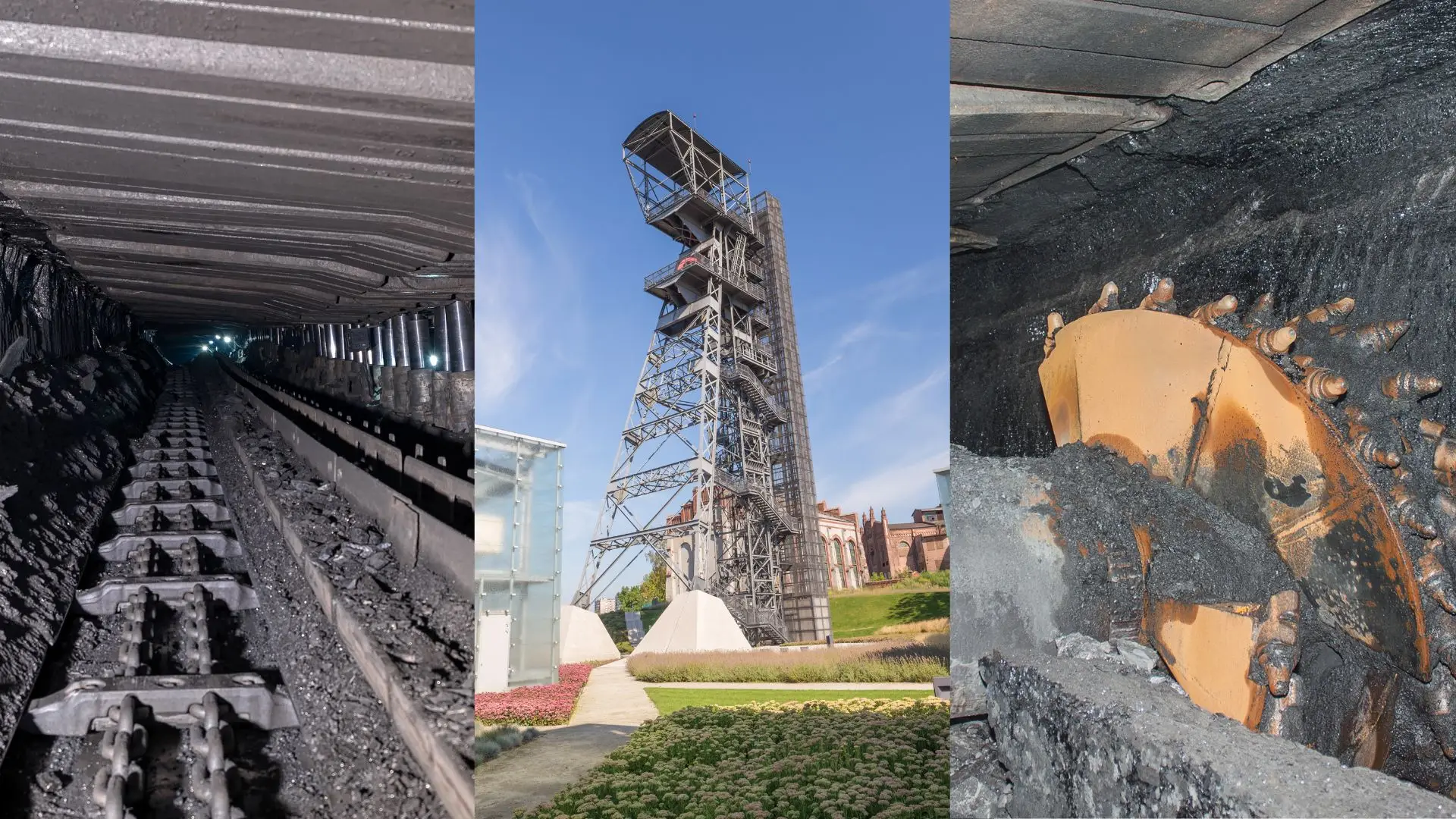
When it comes to slashing methane emissions, the spotlight typically falls on agriculture and oil and gas. But a significant, under-the-radar source of climate pollution continues to escape serious scrutiny: Ventilation Air Methane, or VAM—the diluted methane steadily released from coal mine shafts around the world.
It’s invisible. But it’s anything but insignificant.

By Richard Mattus
Richard Mattus is a Swedish industrial emissions expert with over 40 years of global experience, specializing in low-concentration methane mitigation. He led the 2025 UNECE Best Practice Guidance on Ventilation Air Methane (VAM) Mitigation.
The Overlooked Giant in Methane Mitigation
VAM is released when underground coal mines use ventilation to ensure worker safety. Although each stream contains only a small concentration of methane—usually between 0.2% and 1%—the enormous volume of air involved means emissions quickly accumulate to staggering levels.
And those emissions matter. Methane is more than 80 times more potent than CO₂ over a 20-year horizon ( IPCC, AR6, 2021), making even low-concentration leaks, such as VAM, a significant obstacle to near-term climate goals.
A single large coal mine can emit enough VAM to equal the annual emissions of two million cars, according to a study from the UN Economic Commission for Europe (UNECE). Yet, most jurisdictions still lack binding policies to address this source.
Missing in Action: EU, U.S., and Australia
Despite significant pledges, such as the EU Methane Strategy and the Global Methane Pledge, VAM remains unregulated mainly, primarily across the EU, the U.S., and Australia.
True, agriculture contributes more to global methane emissions than coal mining. But, mitigation efficiency depends on concentration and scale at the point of release. While a cow emits around 60 to 120 kg of methane annually, a single coal mine ventilation shaft can release 50,000 tonnes or more— offering vastly more impact per intervention.
European Union: Countries such as Poland and the Czech Republic still operate gassy underground mines, yet the forthcoming EU Methane Regulation has not yet prioritised VAM. Its inclusion would unlock a high-impact mitigation pathway in these regions.
Australia: Coal mining is responsible for nearly 70% of the country’s energy-sector methane emissions, yet there are no specific rules or incentives targeting VAM. While the National Greenhouse and Energy Reporting (NGER) Scheme requires disclosure, it provides no regulatory or financial push for mitigation.
United States: Two VAM destruction systems are currently operating. However, recent federal commitments to expand coal mining have notably overlooked both mine safety and methane reduction measures.
China leads the world in deploying Ventilation Air Methane (VAM) abatement, with multiple commercial-scale projects already operational. For over a decade, China has recognised the climate and safety value of capturing methane from coal mine ventilation systems, integrating VAM into its broader emissions reduction and air quality strategies.
Mitigation not monetisation
VAM can be used to generate energy, but in most cases, it’s not economically practical. UNECE’s Best Practice Guidance notes
that energy recovery is only financially viable when methane concentrations exceed 0.5%. Even then, the required infrastructure can cost three to four times more than conventional mitigation systems designed solely to destroy methane.
The most effective and scalable solution is the direct destruction of methane. Technologies such as Regenerative Thermal Oxidizers (RTOs) can eliminate over 98% of methane in ventilation air, converting it into heat energy in the process.
More importantly, RTOs neutralize methane, one of the most potent short-term climate threat.
What Would Make VAM Projects Worthwhile?
To unlock the climate potential of VAM mitigation, governments must create the right enabling environment. Here’s how:
Carbon credit eligibility: Include VAM destruction in regulated and voluntary carbon markets such as the EU Emissions Trading System (EU ETS) or Australia’s ACCU framework. This would give projects a revenue stream and make investment more attractive.
Targeted financial support: Public funding through grants, tax credits, or concessional loans—similar to those offered for wind and solar—could reduce upfront costs. Institutions like
the Clean Energy Finance Corporation (CEFC) or the EU Innovation Fund could play catalytic roles.
Regulatory signals: Governments should phase in VAM mitigation requirements for active mines, allowing flexible compliance pathways (e.g. market-based options, cooperative projects).
Robust MRV systems: Measurement, Reporting, and Verification (MRV) are essential for tracking emissions, validating destruction claims, and supporting carbon market
participation. It also builds investor and public confidence.
Promising Momentum—But Action Must Follow
Several promising initiatives are under way. Horizon Europe is funding partnerships to test VAM destruction in coal regions of Poland and the Czech Republic. Leading universities in Australia, the UK, and Europe are developing cost-effective models and financing blueprints for VAM mitigation systems.
Piecemeal pilots aren’t enough. To move VAM from the margins to the mainstream, we need coordinated national and regional policies that recognize both its strategic role in meeting methane reduction targets and the proven viability of existing operational projects.
A Scalable, Solvable Climate Opportunity
VAM offers a rare triple-win in climate policy: it’s a source of emissions that’s technically solvable, geographically concentrated, and measurable in real time.
“VAM is one of the most scalable near-term climate solutions we have,” says Lena Höglund Isaksson, a senior researcher at the International Institute for Applied Systems Analysis (IIASA).
“We just need to start treating it that way.”
In a decade where the pace of climate action matters more than perfection, tackling VAM offers one of the most accessible and impactful policy levers. What it requires now is political will, clear regulation, and mobilised financing.
Tackling VAM gives coal a cleaner exit.
