
The battery race is already being won. The question is whether Europe — and Sweden — is still in it.
There is a moment in every technological transition when the debate shifts. When the question moves from ‘will this work?’ to ‘who will be left behind?’
We are at that moment with batteries.
The numbers from 2025 are not projections or scenarios. They are results. One in four cars sold globally last year was electric. In China, electric vehicles crossed 50% of all new car sales for the first time in history. Grid-scale battery storage is now outcompeting gas peakers in Australia — pushing wholesale electricity prices down 12% in a single year. In the United States, 19 gigawatts of battery storage was installed in twelve months, a 60% year-on-year jump.
And China? China installed 63 gigawatts.
The battery race is not a future event. It is a present reality. And the scoreboard is not close.
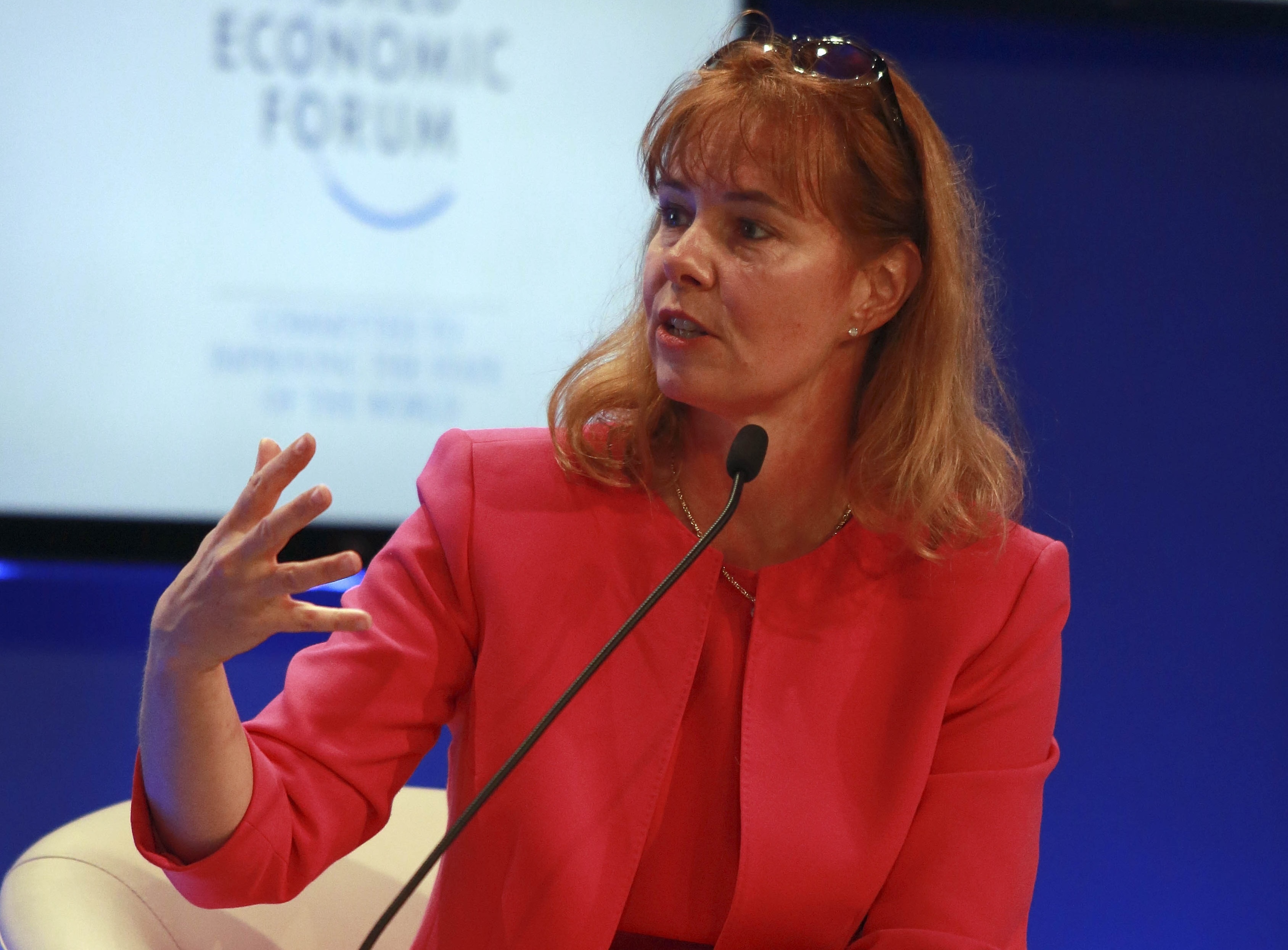
I had the privilege of sitting down with Christina Lampe-Önnerud — founder and CEO of Cadenza Innovation, PhD from Uppsala University, postdoctoral researcher at MIT — for the latest episode of Transformers: The Sustainability Changemakers. What follows is what I took away from that conversation.
The scale of what is happening
116 million electric cars on the road globally in 2026 — a 30% increase year-on-year
21 million new electric cars sold in 2025 — one in four of all new vehicles
63 GW gigawatts of battery storage added by China in 2025 — vs 19 GW in the United States
1.7 million barrels oil consumption displaced by EVs daily in 2025 — projected to rise to 5m by 2030
12% drop in Australian wholesale electricity prices — as batteries overtook gas peakers
Sources: IEA, BloombergNEF, AEMO — referenced in the Transformers podcast episode
China didn't get lucky. It made a decision.
One of the clearest things Christina said in our conversation was this: China’s dominance in battery manufacturing is not the result of some natural advantage or lucky timing. It is the result of nearly three decades of consistent, patient industrial policy.
For 30 years, the Chinese government backed battery technology — through recessions, through technological dead ends, through the years when the rest of the world was still unsure whether the electric vehicle transition was real. The result is a manufacturing base that can produce batteries at a scale and cost that no other country currently matches.
The latest signal is CATL’s Naxtra — the world’s first mass-produced sodium-ion battery. Sodium-ion has been ‘almost ready’ for a decade. What changed is not the chemistry. What changed is that China had the manufacturing infrastructure, the investment patience, and the policy continuity to take it across the line.
Sodium-ion batteries contain no lithium and no cobalt. For countries that have been squeezed by dependency on those materials — including most of Europe — this matters enormously. It is not just a technological development. It is a supply chain and geopolitical signal.
Architecture first — and why that matters
Christina’s life work at Cadenza Innovation is built on a conviction that most of the battery industry has been thinking about the problem the wrong way. The dominant approach is to optimize at the cell level — make the cell chemistry better, make it cheaper, make it more energy-dense. What Cadenza has done instead is redesign the architecture that holds cells together.
The result — the Cadenza supercell — is a battery that is significantly safer, more thermally stable, and more manufacturable than conventional designs. It is engineered so that even if one cell fails, the failure does not cascade through the system. In grid-scale storage, where a battery failure can mean a fire in a warehouse-sized installation, this is not a marginal improvement. It is a fundamental redesign.
What I find striking about Christina’s approach is the philosophical clarity behind it. She is not chasing the next chemistry. She is asking: whatever the chemistry turns out to be, how do we build a system that is safe, scalable, and honest about cost? That is a harder question — and it is the right one.
Northvolt: the lesson Europe cannot afford to miss
For a Swedish audience, and for anyone who has followed the European energy transition closely, the Northvolt story is impossible to ignore.
Northvolt was Europe’s answer to CATL — a Swedish-born battery champion, backed by Volkswagen, Goldman Sachs, and the European Investment Bank, positioned to give the continent a homegrown alternative to Chinese manufacturing. At its peak, it was valued at over $12 billion. It was the industrial bet that was supposed to prove Europe could compete.
It is now in bankruptcy protection.
What went wrong? The answer, as Christina describes it in our conversation, is not primarily technological. Northvolt’s battery chemistry was sound. The problem was the gap between ambition and execution — between the scale of the vision and the operational infrastructure needed to deliver it. Manufacturing batteries at gigafactory scale is extraordinarily difficult. China learned this over 30 years. Northvolt tried to compress that learning into a decade, under enormous investor pressure to grow fast.
The lesson from Northvolt is not that Europe cannot build a battery industry. The lesson is that you cannot shortcut the manufacturing learning curve — no matter how good your engineering is or how much capital you raise.
This is a lesson that applies far beyond batteries. It is a lesson about industrial strategy, about patience, about the difference between a headline and a supply chain.
Christina is not pessimistic about Europe’s prospects. But she is honest: the window is narrow, the competition is formidable, and the policy environment needs to match the ambition.
Australia shows what the other side looks like
While Europe debates industrial strategy, Australia is running the experiment. The results are in.
In 2025, grid-scale batteries in Australia overtook gas peaking plants as the primary source of dispatchable power during the evening peak. Battery discharge tripled year-on-year. And — crucially — wholesale electricity prices fell by 12%.
This is the answer to the question that has dominated energy policy debates for a decade: can renewables plus storage actually replace fossil fuel backup? In Australia, at least, the answer is now empirically yes.
The implications for grid planning in Europe and the United States are significant. The economics are not theoretical. The technology works at scale. The remaining barriers are regulatory, financial, and political — not technical.
What Christina expects next — and what I'm watching
I always end Transformers with the same question: what is the one breakthrough — technical, policy, or commercial — that you expect in the next three years that most people are not yet paying attention to?
Christina’s answer is in the episode. I won’t spoil it here. But I will say: it reframed something for me.
The battery transition is not primarily a story about technology anymore. The technology exists. What we are now in is a story about manufacturing scale, supply chain sovereignty, regulatory courage, and industrial patience. The countries and companies that understand this are the ones building the future. The ones still waiting for a perfect technology solution are already behind.
Christina Lampe-Önnerud is not waiting. She never has been.
